
24/7 Global Support • Fast Response • Direct Factory Price • Request Samples & Prototyping Tests • Ship Globally • WhatsApp RFIDock


Table of Contents
RFID Inlay Structure and Pricing: What Determines the Cost of an RFID Inlay?
Know how substrate materials, thickness, copper antennas, RFID chips, printing methods, manufacturing processes and bulk procurement affect RFID inlay pricing. Buyers should consider check list of details to consider
1. RFID Inlay Structure
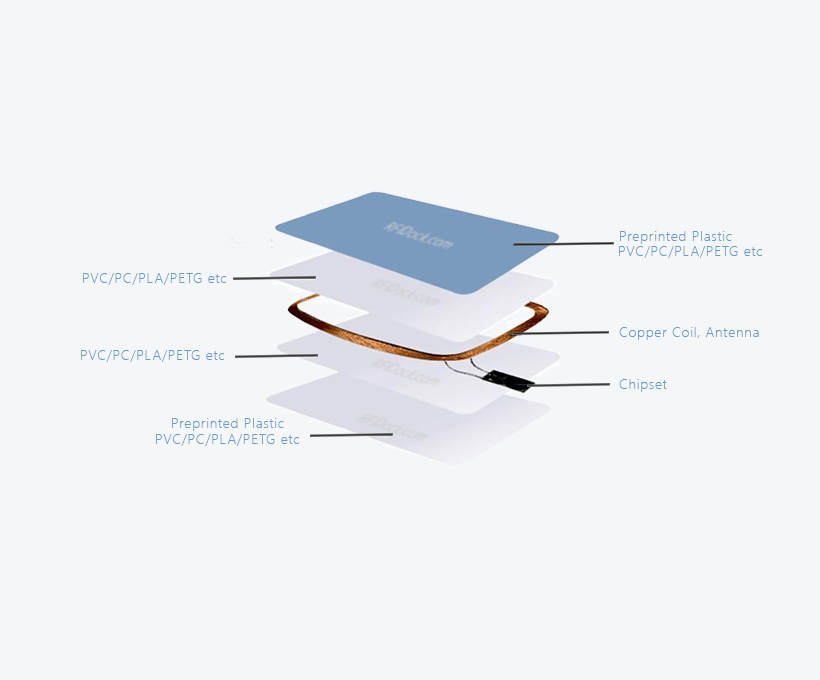
An RFID inlay is a functional component used in contactless smart cards, NFC products, RFID labels, and various identification applications. It typically consists of a substrate, an antenna, and an RFID chip.
Depending on the product design and manufacturing process, additional bonding materials, protective layers, or other components may also be required.
A typical RFID smart card inlay consists of three main functional components:
1.1 Substrate Materials
The substrate provides the physical foundation for the antenna and RFID chip. It supports the electronic components and helps maintain the dimensional stability of the inlay during subsequent manufacturing processes.
Common substrate materials include:
- PVC (Polyvinyl Chloride): Widely used in conventional smart card manufacturing due to its availability, processing characteristics, and cost efficiency.
- PETG (Polyethylene Terephthalate Glycol): Offers good dimensional stability and is commonly used in card manufacturing applications.
- PC (Polycarbonate): Known for its durability and mechanical properties, particularly in applications requiring long service life.
- PLA (Polylactic Acid): A bio-based material used in certain environmentally oriented card applications.
The selection of substrate material affects not only the material cost but also processing conditions, compatibility with other card layers, and final product performance.
1.2 Antenna
The antenna is responsible for receiving and transmitting electromagnetic signals between the RFID chip and the reader.
Common antenna manufacturing technologies include:
- Copper wire antenna
- Etched copper antenna
- Aluminum etched antenna
- Printed conductive antenna
Copper antennas are widely used in various contactless smart card applications. However, antenna material, wire diameter, conductor thickness, antenna dimensions, and manufacturing technology can all influence the final cost.
Different antenna designs also require different production processes and equipment.
1.3 RFID Chip
The RFID chip stores information and performs communication functions within the RFID system.
Different applications require different chip technologies and specifications.
Common chip categories include:
- LF (Low Frequency): Typically operates at 125 kHz or 134.2 kHz.
- HF (High Frequency): Typically operates at 13.56 MHz and is widely used in contactless cards and NFC applications.
- UHF (Ultra-High Frequency): Commonly operates in the 860–960 MHz range, depending on regional regulations, and is widely used in supply chain management, logistics, and inventory tracking.
Examples of commonly used chips include MIFARE Classic, MIFARE DESFire, NTAG213, NTAG215, NTAG216, and various UHF ICs.
The chip model, memory capacity, security features, communication protocol, and market availability all influence the material cost of an RFID inlay.
2. How Substrate Material and Thickness Affect Inlay Pricing
Substrate selection is one of the important factors determining the overall cost of an RFID inlay.
Different materials have different raw material prices, processing characteristics, and manufacturing requirements.
In addition to material type, substrate thickness also has a direct impact on material consumption and production costs.
For example, a thinner substrate and a thicker substrate made from the same material will have different material consumption per square meter.
The following factors should be considered:
- Material type: PVC, PETG, PC, PLA, etc.
- Substrate thickness.
- Material density and quality.
- Surface treatment and processing requirements.
- Material availability and procurement volume.
- Compatibility with the antenna and chip assembly process.
For manufacturers producing RFID inlays in large quantities, even a small difference in material thickness can result in a considerable difference in total raw material consumption.
Therefore, substrate specifications should always be confirmed before comparing quotations.
3. Printing Methods and Surface Material Requirements
The printing requirements of the final smart card can also influence the selection and cost of inlay materials.
In many smart card manufacturing processes, the inlay is laminated between printed or unprinted card sheets.
Different printing technologies require different material characteristics and surface treatments.
Common printing technologies include:
- Offset Printing: Widely used for high-volume card production and multi-color printing.
- Silkscreen Printing: Suitable for specific graphic effects, solid colors, and functional printing applications.
- Digital Printing: Provides flexibility for short runs, variable data, and customized designs.
- UV Printing: Uses ultraviolet-curable inks and is suitable for various customized printing applications.
- Laser Engraving: Used for permanent marking and personalization on compatible card materials. It is not a conventional printing process.
The compatibility between the printing method, substrate material, surface coating, ink system, and subsequent lamination process must be considered.
For example, a material designed for conventional offset printing may not necessarily provide the same performance with UV or other digital printing systems.
When selecting an RFID inlay, manufacturers should consider not only the inlay itself but also the printing and lamination requirements of the complete card.
4. How Finished Card Thickness Affects RFID Inlay Cost
The thickness of the finished smart card is another important factor.
A standard ID-1 format payment card typically has a nominal thickness of 0.76 mm, although other card thicknesses are available for different applications.
The final card thickness determines the available space for the inlay and surrounding material layers.
For example, manufacturers need to consider:
- Top and bottom card sheet thickness.
- Inlay substrate thickness.
- Antenna and chip dimensions.
- Adhesive or bonding layer thickness.
- Lamination conditions.
- Final card thickness and dimensional tolerances.
A thinner finished card may require a different combination of substrate thicknesses and more precise process control.
Similarly, thicker cards may require additional material consumption.
The relationship between inlay thickness and finished card thickness is therefore important when calculating material requirements and determining the appropriate manufacturing process.
It is essential to distinguish between the thickness of the inlay itself and the thickness of the finished smart card.
5. Manufacturing Processes and Production Costs
Beyond raw material costs, the manufacturing process also plays an important role in determining the final price.
Different production technologies and levels of automation result in different labor costs, production efficiency, and quality consistency.
Important manufacturing factors include:
Antenna Manufacturing
Different antenna technologies require different equipment, materials, and processing procedures.
Chip Bonding and Assembly
The RFID chip must be accurately connected to the antenna. The bonding technology, conductive materials, equipment precision, and production yield can all affect manufacturing costs.
Manual and Automated Production
Manual assembly and semi-automated or fully automated production have different cost structures.
Manual processes may involve higher labor costs per unit and greater dependence on operator skills. Automated production generally offers higher throughput and more consistent production conditions, although equipment investment, maintenance, and production volume must also be considered.
Quality Control
Inspection and testing requirements may include:
- Chip functionality testing.
- Antenna continuity and performance checks.
- Communication testing.
- Dimensional inspection.
- Visual inspection.
- Production yield management.
A supplier’s production process and quality control standards should therefore be considered alongside the quoted unit price.
6. Raw Material Procurement and Purchase Volume
The cost of an RFID inlay is also influenced by how manufacturers purchase their raw materials.
The main raw material cost components generally include:
- Substrate materials.
- Copper or other antenna materials.
- RFID chips.
- Adhesives and bonding materials.
- Other auxiliary production materials.
Purchasing these materials in different quantities can result in different unit prices.
For example, manufacturers purchasing copper materials, substrate sheets, and RFID chips in large quantities may obtain more competitive supplier quotations than manufacturers purchasing small quantities on a spot basis.
Other procurement factors include:
- Long-term supplier agreements.
- Bulk purchasing and inventory planning.
- Chip brand and distribution channels.
- Material specifications and consistency.
- Raw material market fluctuations.
- Transportation and storage costs.
- Minimum order quantities.
However, purchasing materials in larger quantities does not automatically guarantee a lower final inlay price. Inventory costs, cash flow, material utilization, production efficiency, and supplier reliability must also be considered.
Effective procurement and supply chain management are important parts of maintaining competitive RFID inlay pricing.
7. What Should Buyers Consider When Comparing RFID Inlay Prices?
When requesting quotations from different suppliers, buyers should avoid comparing prices based on the product name alone.
Two RFID inlays with similar appearances may have substantially different material specifications and manufacturing processes.
To make a meaningful comparison, buyers should confirm the following specifications:
| Specification | Details to Confirm |
|---|---|
| Substrate Material | PVC, PETG, PC, PLA, etc. |
| Substrate Thickness | Thickness of each substrate layer |
| Antenna Material | Copper, aluminum, or other conductive materials |
| Antenna Technology | Copper wire, etched, or printed antenna |
| Chip Model | Exact IC brand and model |
| Operating Frequency | LF, HF, or UHF |
| Inlay Dimensions | Length, width, and design |
| Printing Requirements | Printing technology and surface compatibility |
| Finished Card Thickness | Target thickness of the completed card |
| Manufacturing Process | Manual, semi-automated, or automated |
| Quality Requirements | Functional testing and inspection standards |
| Order Quantity | Sample, small batch, or mass production |
RFID inlay Structure and Pricing should be concerned. Customer Providing complete specifications helps mannufacturers calculate more accurate quotations and reduces misunderstandings during production.
8. Conclusion: RFID Inlay Pricing Is a Combination of Materials, Technology and Manufacturing Efficiency
The price of an RFID inlay is not determined by a single component.
Substrate materials, thickness, antenna technology, chip selection, printing compatibility, finished card specifications, manufacturing methods, raw material procurement, and production volume all contribute to the final cost.
For smart card manufacturers and RFID product buyers, understanding these factors makes it easier to evaluate suppliers, optimize material specifications, and identify the most suitable solution for their applications.
At RFIDock, we focus on RFID materials, smart card components, and manufacturing coordination. By understanding different material specifications and production requirements, we aim to help customers identify practical and cost-effective solutions for their RFID projects.
Looking for RFID Inlay Solutions?
Contact RFIDock.com team with your chip specifications, substrate requirements, dimensions, and estimated order quantity, Need samples of your custom inlays? Conntact us.. Our team can help coordinate suitable material and manufacturing solutions based on your application and target cost.
When you purchase core inlays and printing materials from us, you can enjoy the following benefits: free samples, order pricing at 8% below market price, and a promo code available at the bottom of our website.
| trhs3mhk |
Article Categories
- Application Guides
- Customer Support
- Expirience
- Inlays&Prelam
- Materials & Printing
- RFID Technology
- Smart Card Manufacturing
- Technical Guides
- Useful
Products by Category
-
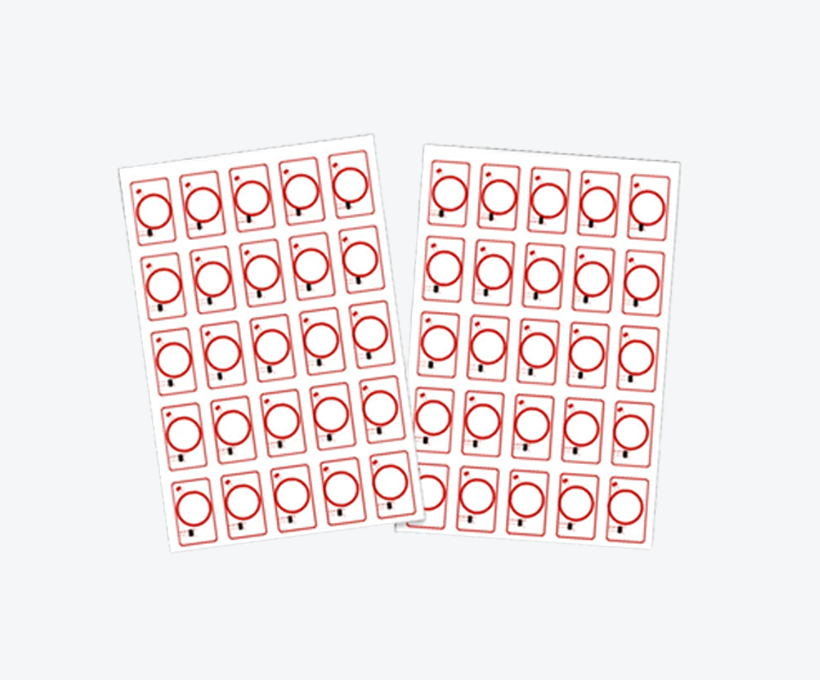
25-Card Composite Core Material for ID & IC Cards
-
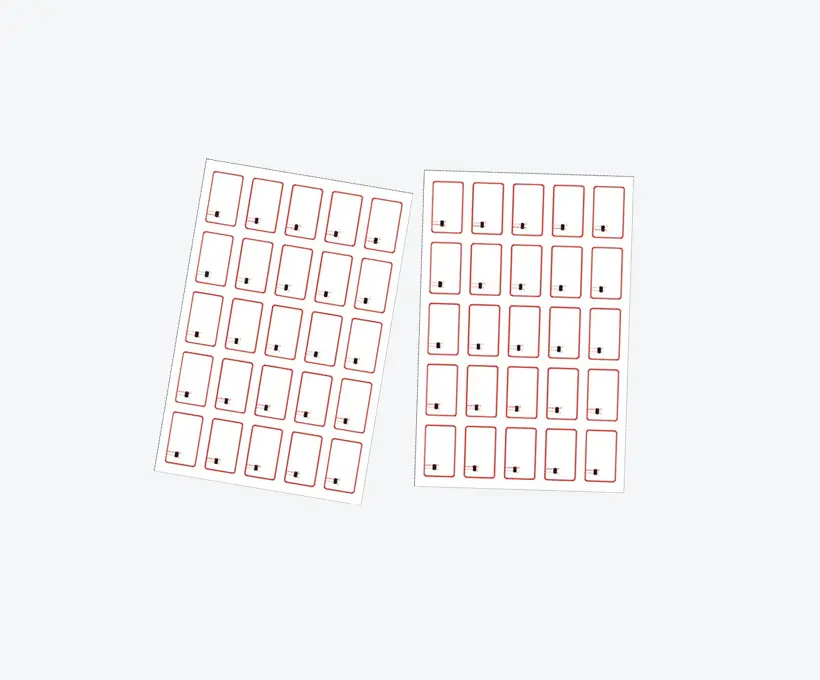
5×5 LF RFID Custom Inlays | Chip, Antenna, Sheet Size & Frequency Customizable
-
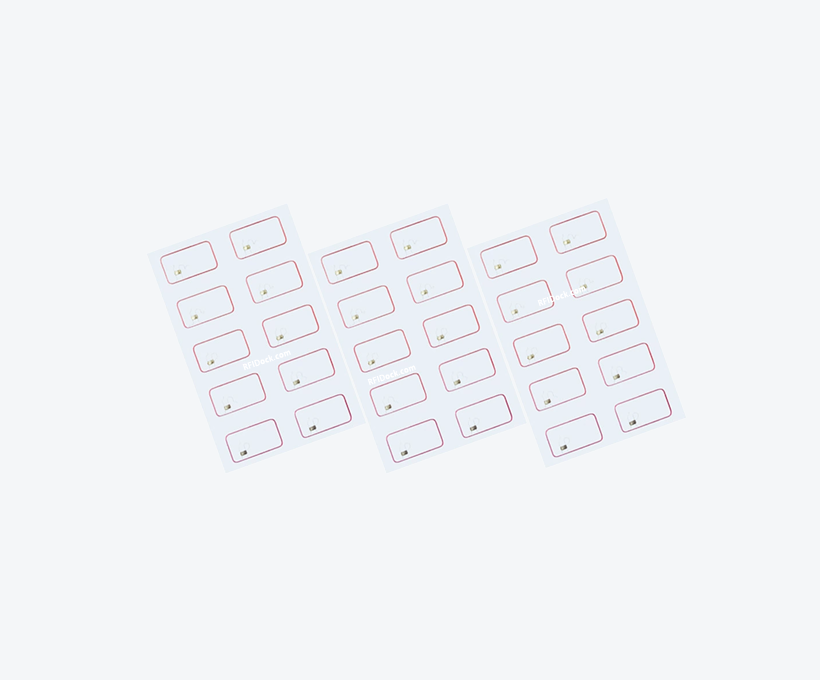
A4-Size HF ID Card Inlay – 10-Up (5×2 Layout) for Contactless Card Production
-

Custom Low-Frequency 4×4 RFID Inlay Sheet
-
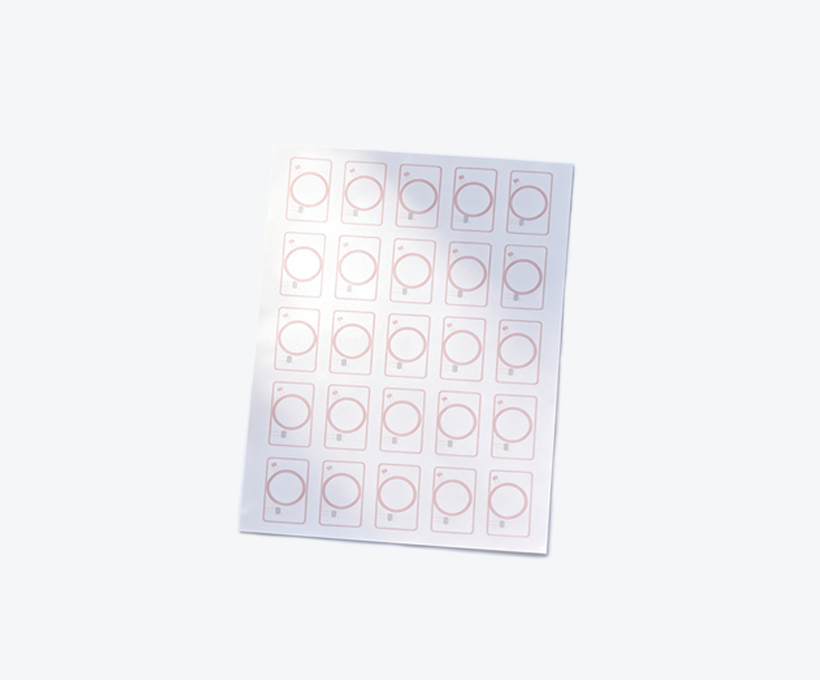
Customizable RFID Inlay Sheets
-
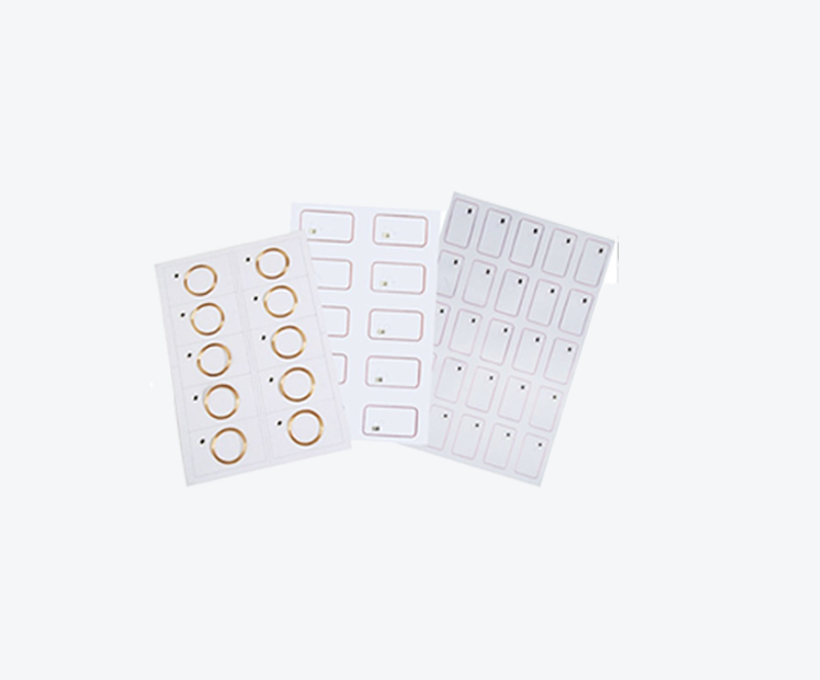
Factory Wholesale HF IC & LF ID RFID Inlays
-
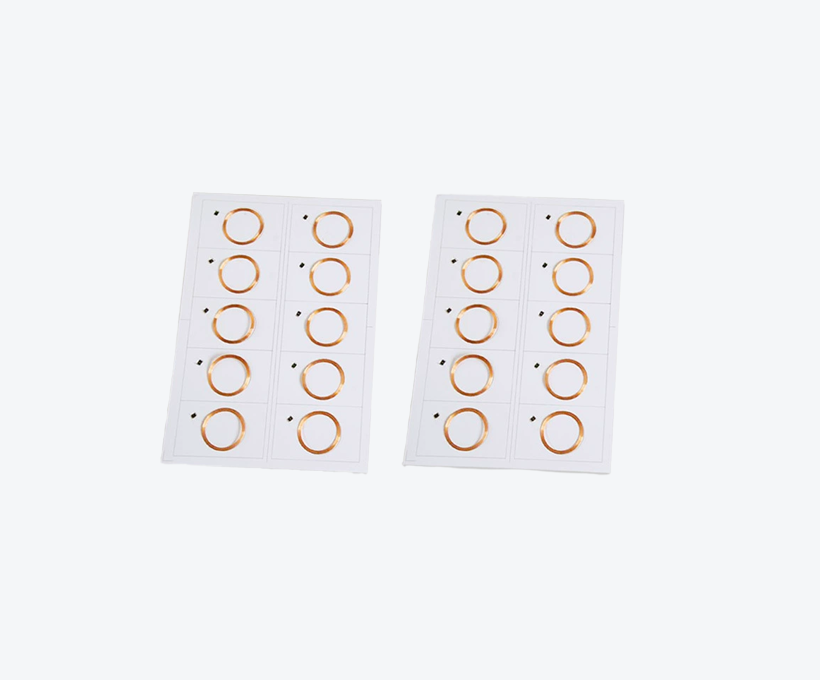
LF RFID ID Card Inlay, A4 10-Up (5×2), TK4100/EM4100 Optional, PVC Prelam for Access Card Manufacturing
-
NXP MIFARE Classic EV1 1K (7-Byte UID) RFID Inlay / Dry Inlay
Original price was: $0.33.$0.31Current price is: $0.31. -
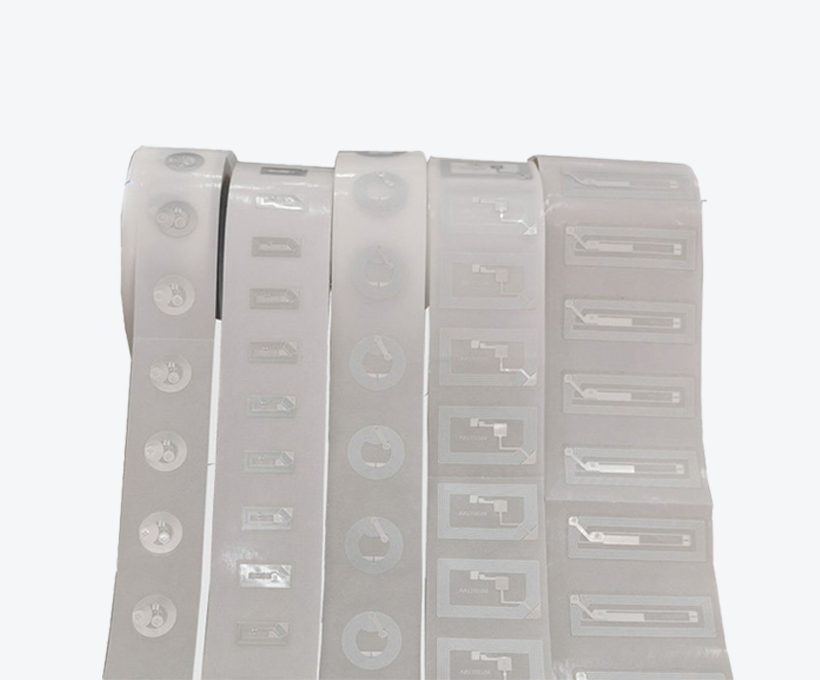
Premium Transparent NFC Sticker
$0.30 -
Wholesale RFID Inlay Sheets | IC+ID |
$0.01