
24/7 Global Support • Fast Response • Direct Factory Price • Request Samples & Prototyping Tests • Ship Globally • WhatsApp RFIDock

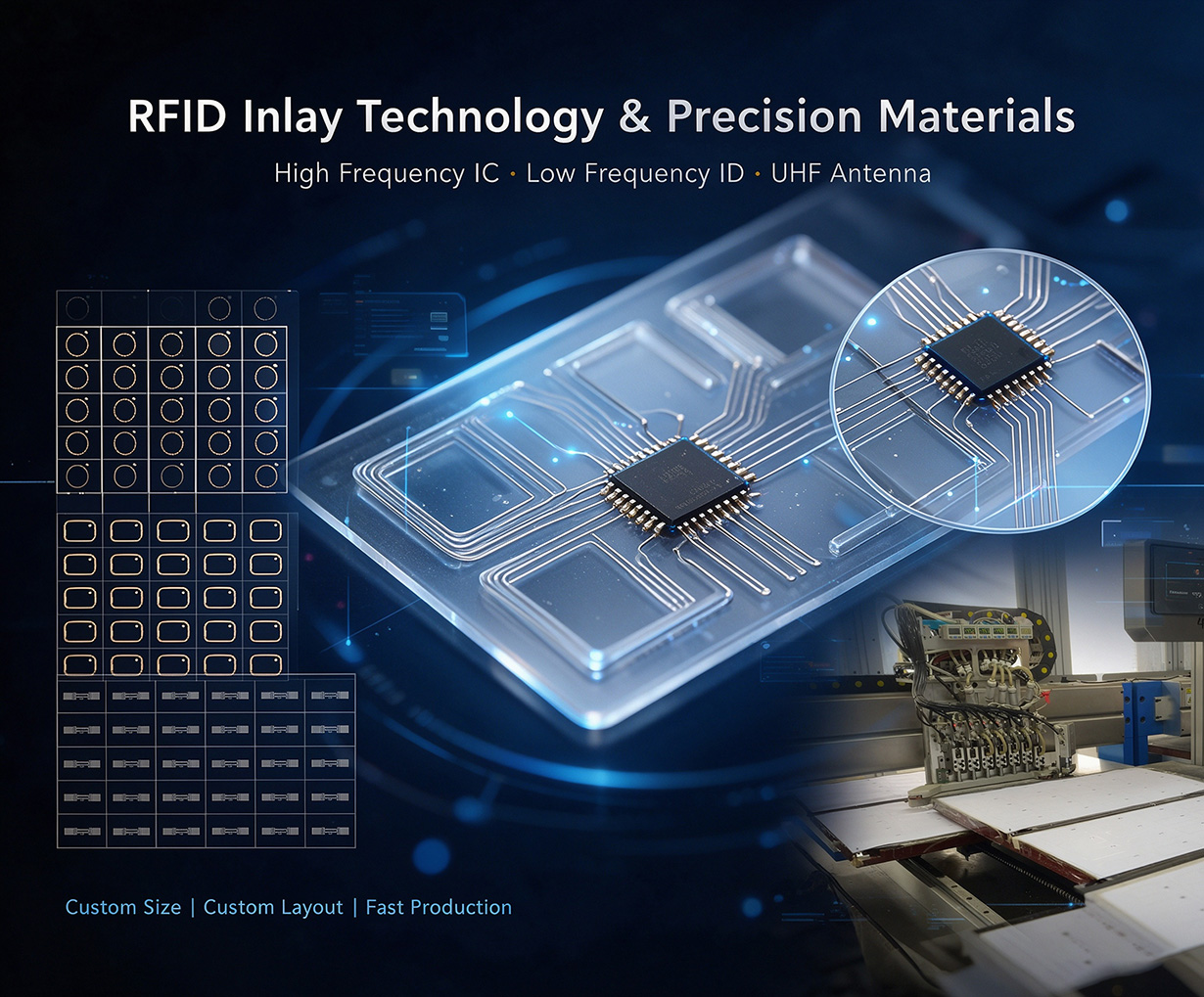

Choosing an RFID chip should start with the application rather than the chip name.
Different RFID projects require different operating frequencies, communication protocols, memory capacities, security functions and reading distances.
Start With the Application
Before selecting a chip, determine how the final product will be used.
Common applications include:
- Access control
- Employee identification
- Hotel and membership systems
- NFC interaction
- Asset management
- Inventory tracking
- Product identification
- Authentication
Frequency Matters
RFID technologies can generally be divided into LF, HF/NFC and UHF solutions.
LF is commonly used for short-range identification applications.
HF and NFC technologies are widely used in contactless smart cards, access systems and NFC-enabled applications.
UHF is commonly selected for longer-range identification, logistics and asset tracking.
Consider Memory and Security
Two chips operating at the same frequency may provide very different capabilities.
Depending on the project, customers may need to evaluate:
- Memory capacity
- Read/write functionality
- UID requirements
- Security features
- Authentication
- Protocol compatibility
- Reader compatibility
The Antenna Is Also Important
The chip alone does not determine the performance of an RFID product.
Antenna design, product dimensions, materials and operating environment can significantly affect performance.
For customized projects, chip and antenna selection should therefore be considered together.
RFIDock supports multiple RFID and NFC technologies for smart cards, inlays, tags and customized identification products.
Send us your application and technical requirements, and our team can help you evaluate suitable chip and inlay options.